
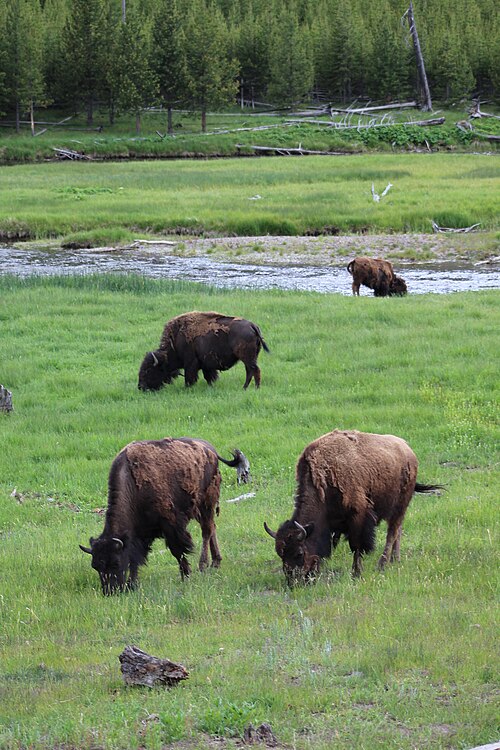
BLM Says American Prairie’s Bison Can No Longer Graze on Public Lands: History, Law, and the Future of Bison Restoration
By Derrick Stallings – HuntingOfficer.com
Introduction
In January 2026, the U.S. Bureau of Land Management (BLM) revoked the grazing permits that allowed American Prairie’s bison herd to graze on tens of thousands of acres of federal land in north-central Montana. The ruling stunned conservationists and pleased many livestock groups. At the heart of the dispute is a deceptively simple question:
Are bison livestock — or wildlife?
Behind that question lies more than a century of history, layers of federal law written for cattle and sheep, modern tribal restoration efforts, and competing visions of what America’s public lands are meant to be.
This decision is not just about one nonprofit organization or one herd of bison. It is about whether U.S. land policy can adapt from a ranching-focused model of the 20th century to an ecosystem-restoration model in the 21st.
The Lost Prairie: Historical Context
Bison and the Pre-Colonial Great Plains
Before European settlement, an estimated 30 to 60 million bison roamed the Great Plains from Canada to Mexico. They were a keystone species shaping grassland ecology and a central pillar of Plains Tribal cultures.
Bison grazing patterns created mosaics of short and tall grasses, supported prairie birds and pollinators, and maintained open grasslands. Indigenous nations actively managed these landscapes through fire use and seasonal hunting.
The Great Plains were not untouched wilderness — they were functioning ecological systems shaped by bison and people.
19th-Century Extermination
Between 1830 and 1890, bison were nearly wiped out due to commercial hide hunting, railroad expansion, and federal policies that encouraged their destruction to undermine Tribal food systems.
By 1889, fewer than 1,000 bison remained in North America. This collapse ranks among the most dramatic wildlife declines in human history.
Early Conservation and Domestication
Bison survived because of Yellowstone National Park and a handful of private ranchers. However, most surviving herds were managed like livestock, fenced and bred for meat or display rather than ecological restoration.
This is how bison became legally classified as livestock in many states, including Montana.
The Modern Restoration Movement
In the late 20th century, conservationists and Tribal nations began pursuing a different vision: restoring bison to large landscapes where they could function as wild grazers.
Founded in 2001, American Prairie sought to create a multi-million-acre prairie reserve in eastern Montana using private land purchases, public land grazing permits, and bison reintroduction.
This approach placed the organization on a collision course with traditional livestock grazing interests.
American Prairie and the BLM
The 2022 Grazing Approval
In 2022, after years of environmental review, the BLM approved American Prairie’s plan to graze bison on more than 63,000 acres of federal land. The decision substituted bison for cattle on several grazing allotments and required fencing, disease testing, and compliance with Montana livestock rules.
At the time, the BLM concluded the change met land health standards and fit within existing grazing law.
The 2026 Reversal
In January 2026, the BLM revoked those permits, stating that grazing permits are legally limited to “domestic livestock” used for production purposes. Because American Prairie’s bison were managed primarily for ecological restoration rather than meat production, the agency concluded it lacked legal authority to allow them on public grazing allotments.
The ruling returned those allotments to cattle-only grazing.
Federal Law: Why This Happened
The Taylor Grazing Act of 1934
Passed during the Dust Bowl, the Taylor Grazing Act created grazing districts and allowed permits for domestic livestock grazing to stabilize the livestock industry and prevent overuse of rangelands.
The law assumes animals are raised for agricultural production. It does not mention wildlife restoration.
This statute now forms the legal backbone of the BLM’s decision.
Federal Land Policy and Management Act (1976)
FLPMA is the BLM’s guiding law and requires the agency to manage public lands for “multiple use” and “sustained yield,” including grazing, recreation, and wildlife habitat.
However, FLPMA does not override the Taylor Grazing Act. Grazing permits still rely on livestock authority rooted in 1930s agricultural policy.
Public Rangelands Improvement Act (1978)
This law reinforced livestock grazing as a legitimate public land use and further tied grazing permits to traditional ranching operations.
National Environmental Policy Act (NEPA)
NEPA governs environmental review but does not guarantee outcomes. The BLM may reverse prior decisions if it changes its interpretation of the underlying law.
That is what occurred in 2026.
State vs. Federal Law
Montana classifies bison as livestock. Federal grazing law does not automatically adopt state definitions.
The BLM now argues that livestock must be raised primarily for production, not ecosystem restoration.
Tribal Role in Bison Restoration
For many Plains Tribes, restoring bison represents cultural renewal, food sovereignty, and ecological healing. Dozens of tribes now manage herds through the InterTribal Buffalo Council.
American Prairie partnered with tribes to transfer animals and support tribal restoration projects.
The BLM’s decision raises concerns that tribal bison expansion onto public lands could face similar legal barriers.
Politics and Stakeholders
Ranching Interests
Ranching groups support the decision because it preserves traditional grazing uses and prevents competition with cattle.
Conservation Groups
Environmental organizations argue the decision blocks ecological restoration, prioritizes cattle over native species, and freezes land policy in the 1930s.
State Government
Montana officials have long opposed American Prairie’s project and welcomed the BLM’s reversal.
Federal Leadership
Interior Department leadership has emphasized strict adherence to statutory authority rather than broad reinterpretations of grazing law.
How Courts May View the Case
American Prairie is expected to challenge the decision.
Courts will likely consider:
- Whether the Taylor Grazing Act permits bison grazing
- Whether livestock must be production-based
- Whether the BLM acted arbitrarily in reversing its prior approval
- Whether American Prairie reasonably relied on earlier agency decisions
Possible outcomes include reinstatement of permits, judicial affirmation of the BLM’s interpretation, or congressional action to clarify grazing law.
Timeline
- 1880s — Bison nearly extinct
- 1934 — Taylor Grazing Act
- 1976 — Federal Land Policy and Management Act
- 2001 — American Prairie founded
- 2005 — First bison reintroduced
- 2022 — BLM approves bison grazing
- 2026 — BLM revokes permits
Why This Matters Nationally
The ruling affects:
- Rewilding projects
- Tribal bison restoration
- Prairie bird recovery
- Climate adaptation strategies
- Public land policy nationwide
It forces a fundamental question:
Should public lands be managed primarily for livestock production, or for ecosystem restoration?
For now, the law still answers: livestock first.
Conclusion
The BLM’s decision to remove American Prairie’s bison from public grazing land represents the collision of three eras: 19th-century extermination, 20th-century ranching law, and 21st-century restoration.
It is not merely about bison. It is about whether American public land policy can evolve beyond its agricultural roots toward ecological repair and cultural reconciliation.
Until Congress modernizes grazing law, the prairie will remain governed by statutes written for cattle rather than the species that once shaped it.
Discover more from HuntingOfficer
Subscribe to get the latest posts sent to your email.