
The Horizon Eye: Understanding Cyclovergence and the Secrets of Deer Vision
By Derrick Stallings – HuntingOfficer.com
For a hunter or wildlife enthusiast, there is no moment more frustrating than a deer “blowing” at you when you thought you were perfectly concealed. We often focus on their legendary sense of smell, but the deer’s visual system is a masterpiece of evolutionary engineering designed for one thing: survival.
At the heart of this system is a specialized mechanism called cyclovergence. Understanding how this—and other visual traits—works is the key to mastering the woods in 2025.
The Horizontal Advantage: What is Cyclovergence?
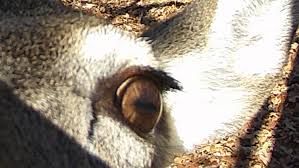
Have you ever noticed that a deer’s pupil is a horizontal slit rather than a round circle? This shape provides a panoramic view of the horizon, where ground-based predators like wolves, coyotes, or humans are most likely to appear.
However, this horizontal advantage presents a problem: what happens when the deer lowers its head to graze? If the eyes stayed fixed, the pupils would tilt vertically, leaving the deer blind to its surroundings.
Cyclovergence is the solution. As a deer pitches its head down to feed, its eyeballs rotate independently in opposite directions—up to 50 degrees each—to keep the pupils perfectly parallel with the horizon. This means that even with its nose buried in the clover, a deer maintains a 300-degree field of view. It is never truly “blind” while feeding.
The Crepuscular Master: Seeing in the Dark
Deer are crepuscular, meaning they are most active at dawn and dusk. Their eyes are specifically tuned to the blue-shifted light of these hours:
- The Blue Light Magnet: Deer lack a UV filter in their eyes, allowing short-wavelength blue light to pour in. While we see a dim, grey landscape at dawn, deer see a bright, high-contrast world.
- The Tapetum Lucidum: This reflective layer behind the retina (which causes “eye shine”) gives the eye a second chance to absorb light, making their low-light vision roughly 18 times better than a human’s.
- Frame Rate of Survival: Deer process visual “frames” nearly four times faster than humans. To a deer, your “slow” reach for a bow looks like a sudden, jerky movement in a slow-motion movie.
Whitetail vs. Mule Deer: Different Eyes for Different Skies
While the biological mechanics are similar, how these two species use their vision varies by habitat:
- Whitetails are the masters of the thicket. Their vision is tuned to detect the slightest flicker of a limb or the “unnatural” solid silhouette of a hunter in the brush. They are “flight first” animals; if they see something off, they are gone.
- Mule Deer utilize their vision for long-range surveillance in open country. Because they live in the wide open, they have evolved a “verify then fly” instinct. They will often bound away and then stop to look back—a visual habit that hunters have exploited for generations.
How to Beat the Deer’s Eye
Knowing these limitations allows you to adjust your strategy for 2025:
- Kill the Blue: Avoid laundry detergents with UV brighteners. To a deer, a shirt washed in “brightening” soap glows like a neon sign in the early morning woods.
- Embrace the Macro-Pattern: Because deer have 20/60 acuity, fine-detailed camo patterns often “blob” together into a solid dark shape. Use high-contrast patterns with large shapes to break up your outline.
- Stay High and Backed: Hunt from elevated stands to stay above their primary horizontal scanning plane, and always ensure you have thick brush behind you to prevent “skylining” your silhouette against the sky.
- Slow Down Further: If you think you are moving slowly, move half that fast. Remember, their brains process your movement faster than yours does.
The Bottom Line
A deer doesn’t see the world the way we do. They don’t see the vibrant reds of autumn leaves, but they see the “glow” of the morning and the tilt of the horizon with a clarity we can only imagine. By understanding cyclovergence and their high-speed visual processing, you can stop being a “blob” in their forest and start becoming a true ghost of the woods.
Discover more from HuntingOfficer
Subscribe to get the latest posts sent to your email.