
Don’t Spook the Longbeard: 6 Ways You’re Accidentally Sabotaging Your Turkey Decoy Setup
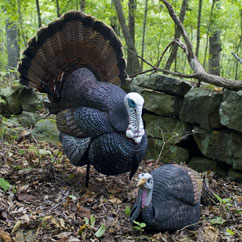
By Derrick Stallings – huntingofficer.com
We’ve all been there: the sun is cresting the ridge, you’ve got a longbeard thundering just a hundred yards away, and your heart is beating like a drum. You’ve done the work, you’ve made the calls, and everything is set—until the tom hits the edge of the field, takes one look at your setup, and decides he has somewhere else to be.
If you’ve ever wondered why a hot bird suddenly went cold, the answer might be staring you in the face—literally. Turkey decoys are powerful tools, but if used incorrectly, they act more like “keep away” signs than magnets.
If you want to ensure your next hunt ends in a puff of feathers rather than a “putt” of alarm, here are the most effective ways to sabotage your turkey decoy setup.
1. Setting Them at Your Maximum Shooting Range
This is perhaps the most common way hunters accidentally ruin their morning. If your shotgun is patterned for 40 yards, it’s tempting to put the decoy at 40 yards.
The Sabotage: Turkeys often “hang up.” A tom will frequently stop 10–20 yards short of a decoy to strut and wait for the hen to come to him. If your decoy is at 40 yards and he stops at 55, you’re stuck watching a show you can’t join.
- The Fix: Set your decoys at 15–20 yards. This ensures that even if he hangs up a bit short, he’s still well within your effective kill zone.
2. Placing the Decoy Directly in Front of You
It feels logical to put the target right where you’re looking, but it’s a tactical nightmare.
The Sabotage: When a gobbler approaches a decoy, his eyes are locked on it. If that decoy is in a direct line with your chest, he is looking straight at you. Any slight movement—shifting your weight, checking your safety, or blinking—will be picked up by his 270-degree peripheral vision.
- The Fix: Offset your decoys 30–45 degrees to your shooting side (left for right-handed shooters). This forces the bird to look away from your silhouette as he focuses on the “hen.”
3. Using a “Strutter” When the Birds are Subordinate
There is nothing more visual than a full-strut tom decoy, but it’s a high-risk, high-reward play that often backfires.
The Sabotage: Late in the season, or in areas with high hunting pressure, many toms have already had their tails kicked by the local dominant bird. If a subordinate tom sees a full-strut decoy, he may decide a fight isn’t worth it and skirt the area entirely.
- The Fix: If you aren’t sure of the local pecking order, use a jake decoy or a single feeding hen. A jake looks like an easy target for a tom to bully, making him more likely to commit.
4. Letting Your Decoys “Spin” in the Wind
A little movement is great; a rotating plastic bird is a death sentence for your hunt.
The Sabotage: While some modern decoys are designed to move, a decoy that spins 360 degrees or wobbles unnaturally on a cheap stake looks like a glitch in the Matrix to a turkey. It signals that something is wrong, causing the bird to “putt” and vanish.
- The Fix: Use a double-stake system or specialized motion stakes that limit the range of motion to a natural side-to-side sway.
5. Telling the Wrong “Story” with Body Language
Turkeys are masters of reading body language. If your decoy setup doesn’t make sense, the local birds won’t buy the lie. Decoy Posture The Message It Sends Potential Risk Feeding Hen “Everything is safe and relaxed.” Lowest risk; works all season. Alert/Upright Hen “I see something suspicious.” Can make incoming birds nervous or “on edge.” Breeding Pair “An intruder is moving in on your girl.” Great for aggressive birds; scary for submissive ones. The Sabotage: Facing a hen decoy directly toward an incoming tom can actually be seen as an act of defiance or a standoff.
- The Fix: Face your hen decoys away from you or at an angle. Gobblers like to “cut the off” or circle in front of a hen to show off. Use that movement to draw him into a better shooting lane.
6. The “Crowded Field” Syndrome
More isn’t always better. While a “flock” of five decoys looks impressive to us, it can be intimidating or confusing to a lone gobbler.
The Sabotage: If your decoys are bunched too closely together, they look like a group of birds that have detected a predator (turkeys bunch up when they are nervous). Additionally, a crowded setup makes it harder to pick out a clean shot without hitting your own plastic gear.
- The Fix: Space decoys 5–10 feet apart. This looks natural and gives the tom plenty of “landing room” to strut without feeling crowded.
Pro Tip: Always carry your decoys in a bag or vest until you reach your spot. A “white-headed” decoy bouncing against your back in the woods isn’t just bad for hunting—it’s a major safety hazard for other hunters who might mistake that flash of white for a real bird.
By avoiding these common pitfalls, you stop sabotaging your own efforts and start turning those distant gobbles into heavy vests. Good luck out there!
*AI was used in part to create this post.
Discover more from HuntingOfficer
Subscribe to get the latest posts sent to your email.